Transitioning from Quality Control (QC) to Quality Management (QM)
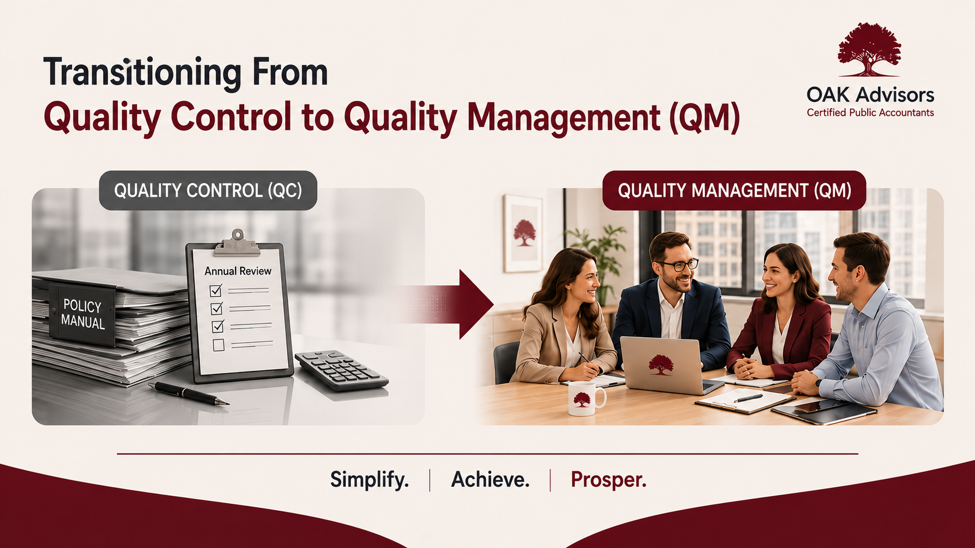
As the accounting profession moves from traditional quality control to a risk-based system of quality management, firms must adapt to new standards that focus on continuous improvement.
The accounting profession is undergoing a significant shift. For years, firms have relied on Quality Control (QC) systems to ensure their engagements met professional standards. However, as the business environment becomes more complex, the limitations of a reactive, checklist-driven approach have become apparent. Enter Quality Management (QM)—a proactive, risk-based approach designed to embed quality into the very fabric of a firm's operations.
The Shift from QC to QM
The transition from QC to QM represents a fundamental change in how firms approach quality. Under the traditional QC model, the focus was often on compliance and post-engagement reviews. It was a "one-size-fits-all" approach that didn't always account for the unique risks and circumstances of individual firms.
Quality Management, driven by standards such as the AICPA's Statement on Quality Management Standards (SQMS) No. 1, flips the script. It requires firms to design, implement, and operate a system of quality management that is customized to the nature and circumstances of the firm and its engagements. This risk-based approach ensures that resources are focused on areas where quality risks are highest.
Key Components of a Quality Management System
A robust QM system is built on several interconnected components:
- Risk Assessment Process: Firms must establish a process to identify, evaluate, and respond to quality risks.
- Governance and Leadership: Leadership must demonstrate a commitment to quality and establish a culture that prioritizes it.
- Relevant Ethical Requirements: Ensuring all personnel adhere to ethical standards, including independence.
- Acceptance and Continuance: Evaluating whether to accept or continue client relationships and specific engagements.
- Engagement Performance: Establishing policies and procedures to ensure engagements are performed in accordance with professional standards.
- Resources: Ensuring the firm has the appropriate human, technological, and intellectual resources.
- Information and Communication: Establishing systems to obtain, generate, and communicate information regarding the QM system.
- Monitoring and Remediation: Continuously monitoring the QM system and remediating any identified deficiencies.
The Benefits of Embracing QM
While transitioning to a QM system requires significant effort and a shift in mindset, the benefits are substantial. A well-designed QM system can lead to:
- Enhanced audit quality and reduced risk of engagement failure.
- Increased efficiency by focusing resources on high-risk areas.
- Improved firm culture that values continuous improvement and proactive risk management.
- Greater confidence from clients, regulators, and other stakeholders.
How OAK Advisors Can Help
Navigating the transition from QC to QM can be challenging, but you don't have to do it alone. As an independent and qualified peer reviewer, OAK Advisors provides objective and practical guidance focused on quality objectives, quality risks, responses, monitoring, and remediation. We combine big firm expertise with the personalized attention of a boutique practice, tailoring our approach to your firm's specific needs.